The Architecture of Non-Hierarchy: Decentralised Unity in the Mesh

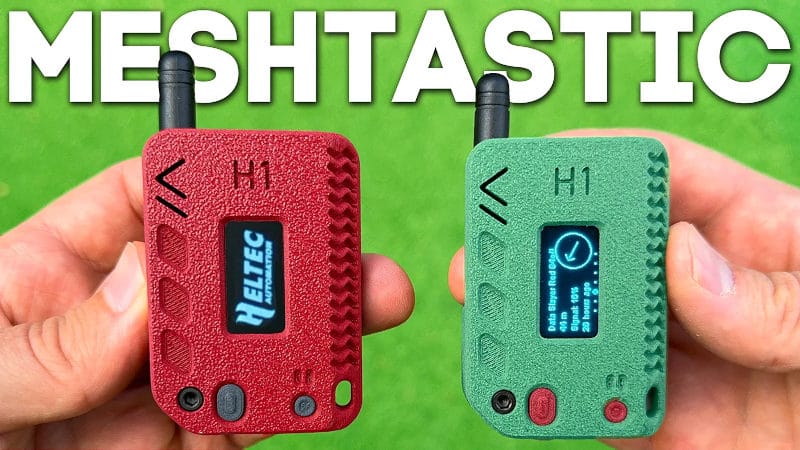
I am an IT student on hiatus, fascinated by how we can reclaim the physical layer of our digital lives. In the world of LoRa, the "node" is the unit of resilience. Meshtastic's power isn't in a shiny screen; it is in its non-hierarchical, multi-hop topology. Every node that hears a packet becomes a relay, extending the reach of the community by another 20km. This "Hop" is the most powerful mechanic we have: it turns every participant into a piece of the infrastructure, creating a web that is stronger than the sum of its parts.
I. The Myth of the "Backup"
When I first started looking into Meshtastic, I fell into the trap of calling it a "backup." I viewed it through the lens of a disaster survivor—a tool for when the cell towers fall or the power grid fails. But that framing is a disservice to the technology. It implies that the current centralised system is the "correct" way to communicate, and the radio mesh is just a temporary, inferior substitute.
I realise now that the opposite is true. Our existing cellular and internet infrastructure—dependent on centralised gateways, ISP monopolies, and government-controlled kill-switches—is the fragile system. The Mesh is the resilient one.
I am an IT student currently on hiatus because of the same systemic failures that this technology seeks to bypass. In my digital life, I am a node. In my community activism for disability and humane tech, I am a node. And in the world of LoRa, the "node" is the unit of resistance.
II. The Mechanics of the Multi-Hop Relay
We need to move past the "magic" of radio and talk about the physics of the relay.
In a standard network, you are a client. You beg a server for access. In a LoRa Mesh Network, you are an independent router.
"The power of Meshtastic is not found in the hardware itself, but in its non-hierarchical, multi-hop topology. Messages are not sent to a central tower; they are flooded through a peer-to-peer network. Every node that hears a packet becomes a relay, extending the reach of the signal by another 20km."
This "Hop" is the most dangerous part of the technology for those who wish to maintain centralised control.
Imagine a message starting in a village in Sabah. It travels 15km to the next node. That node re-broadcasts it another 15km. By the time it has hopped five times, it has traveled 75km across terrain that no cellular signal can reach, without ever touching a single piece of government-monitored infrastructure.
III. Resistance to the "Kill Switch"
Why does this matter for activism? Because centralised control relies on decapitation.
If a "strongman" or an elite group wants to demoralise a crowd, they target the hub. They pressure the ISP to throttle the bandwidth or they order the telco to shut down the towers in a specific district. Once the "hub" is gone, the "spokes" are isolated and blind. This is how you stop a movement.
But you cannot decapitate a Mesh. There is no head.
"Because a mesh network is self-forming and self-healing, there is no single point of failure. If an authority identifies and confiscates a node, the network simply identifies a new path through a different neighbor. It is Decentralised Unity—a system where the strength of the whole is distributed across the many, rather than concentrated in the one."
This makes it nearly impossible for a centralised interest to "shut down" the truth. Propaganda thrives in environments where information only flows from the top down. Meshtastic allows information to flow sideways.
IV. From Sabah to Palestine: The Tool of the Oppressed
This technology is not just for hobbyists; it is a critical tool for those living under systemic injustice.
In Sabah, we face the constant struggle of being a "node" that is often ignored or exploited by the federal centre. Our infrastructure is neglected, and our digital sovereignty is often compromised by laws designed for the peninsula. A local mesh network across our villages would allow us to maintain a permanent, community-owned layer of communication that doesn't care about federal "kill switches" or commercial interests.
In Palestine, the stakes are even higher. We have seen total telecommunications blackouts used as a precursor to military action—a way to ensure that the cries of the oppressed never reach the ears of the world.
If journalism is to survive in such places, it cannot rely on the oppressor’s cables. A journalist with a $25 Heltec board could "hop" a report through a series of nodes in the ruins, eventually reaching a node with a satellite link or a cross-border connection.
V. Beyond Messaging: The Telemetry of Truth
The uses of this federated radio system extend far beyond simple text. Because it is a data-agnostic relay, we can use it for:
- Environmental Activism: Sensors monitoring illegal logging or river pollution in the heart of Borneo can broadcast their data through the mesh, ensuring the evidence reaches the public before it can be "scrubbed" by corporate-government interests.
- Civilian Safety: In conflict zones or during civil unrest, the mesh can provide real-time location tracking of "safe zones" or medical stations, updated by the community for the community.
- Decentralised Journalism: Short-form reports can be injected into the mesh, creating a persistent, un-deletable record of events that exists on every node in the area.
VI. Conclusion: The Signal of the Peer
I am saving my money for a Heltec LoRa 32 V4 not because I want a new toy, but because I want to be a part of the backbone.
We have spent too long being "users" and "consumers." We have allowed our communication to be a privilege granted by corporations, rather than a right guaranteed by our own hands.
The Mesh reminds us that we are not helpless. We are not just victims of the grid. We are the grid.
Every node I set up, and every node you set up, is a 20km radius where the "Strongman" has no power over the signal. It is a small, quiet, radio-frequency declaration of independence. It is time we stopped waiting for the towers to be built for us, and started becoming the towers ourselves.